David Graeber the Mob Began to Think and Reason Review
I. Let me clarify one matter from the start: Christopher Nolan'due south Batman: The Dark Knight Rises actually is a piece of anti-Occupy propaganda. Nolan, the managing director, claims the script was written before the motility even started, and that the famous scenes of the occupation of New York ("Gotham") were actually inspired by Dickens' account of the French Revolution.
This is probably true, but information technology'south disingenuous. Everyone knows Hollywood scripts are continually being rewritten while movies are in production, and that when it comes to messaging, even details similar where a scene is shot ("I know, let's have the cops face up off with Blight's followers right in front end of the New York Stock Substitution!") or a minor change of wording ("let's modify 'have control of' to 'occupy'") tin make all the difference. Then there'due south the fact that the villains actually do assail the Stock Exchange. Still, it'southward precisely this ambition, the filmmaker's willingness to accept on the great issues of the day, that ruins the movie.
It's deplorable, considering both Batman Begins and The Dark Knight had moments of genuine eloquence. In the beginning films of the trilogy, Nolan has some interesting things to say about homo psychology, and, particularly, about the relationship betwixt creativity and violence. The Nighttime Knight Risesouth is more than ambitious. It dares to speak on a calibration and grandeur appropriate to the times. And in doing so, it stuttered into incoherence.
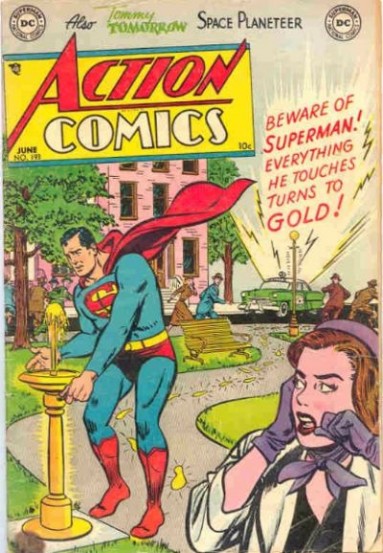
II. Dark Knight Rises offers an opportunity to inquire some potentially enlightening questions nearly contemporary civilisation. What are superhero movies really all about? What could explain the sudden explosion of such movies—one so dramatic that information technology sometimes seems that comic volume-based movies are replacing sci-fi as the chief form of Hollywood special effects blockbuster, almost as chop-chop as the cop movie replaced the Western as the dominant activeness genre in the '70s?
Why, in the process, accept familiar superheroes suddenly been given circuitous interiority: family backgrounds, ambiguity, moral crises and self-doubt? And why does the very fact of their receiving a soul seem to strength them to besides cull some kind of explicit political orientation? One could argue that this happened first not with a comic-book character, but with James Bail. Casino Royale gave Bail psychological depth for the first time. Past the very next motion-picture show he was saving indigenous communities in Bolivia from evil transnational water privatizers. Spiderman, too, broke left in his latest cinematic incarnation, only every bit Batman bankrupt right.
In a way, this makes sense. Superheroes are a product of their historical origins. Superman is a Depression-era displaced Iowa farm male child; Peter Parker, a production of the '60s, is a smartass working-class kid from Queens; Batman, the billionaire playboy, is a scion of the military-industrial complex that was created, just as he was, at the beginning of World War II. Merely again, in the latest movie, the subtext became surprisingly explicit ("You lot're not a vigilante," says the law commander, "yous're an anarchist!"): particularly in the climax, where Spiderman, wounded past a police force bullet, is rescued by an outbreak of working class solidarity equally dozens of crane operators across defy city orders and mobilize to help him. Nolan's motion-picture show is the most aggressive, but information technology also falls the most obviously flat. Is this because the superhero genre does not lend itself to a right-wing bulletin?
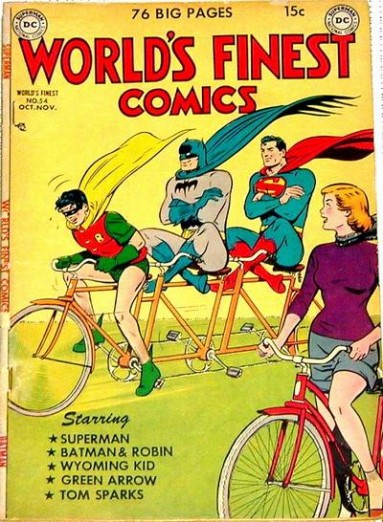
III. Permit's start at the start, by looking specifically at the comic volume stories where the TV shows, cartoon serial and blockbuster movies ultimately came from. Comic-book superheroes were originally a mid-century phenomenon, and like all mid-century pop culture phenomena, they are substantially Freudian.
Umberto Eco one time remarked that comic volume stories already operate a picayune scrap similar dreams: the aforementioned plot is repeated, obsessive-compulsively, over and over; nothing changes; and fifty-fifty as the backdrop for the stories shifts from Swell Depression to Earth War to mail-war prosperity, the heroes, whether they are Superman, Wonder Adult female, the Green Hornet, or the Mighty Thor, seem to exist in an eternal present, never aging, always the same.
The plot is about always some approximation of the following: a bad guy, maybe a crime dominate, more often a powerful supervillain, embarks on a project of world conquest, destruction, theft, extortion, or revenge. The hero is alerted to the danger and figures out what's happening. Later trials and dilemmas, at the last possible minute the hero foils the villain's plans. The earth is returned to normal until the adjacent episode when exactly the aforementioned thing happens in one case again.
It doesn't take a genius to figure out what's going on here. These "heroes" are purely reactionary, in the literal sense. They have no projects of their ain, at least not in their role as heroes: equally Clark Kent, Superman may be constantly trying, and declining, to get into Lois Lane's pants, but as Superman, he is purely reactive. In fact, superheroes seem about utterly lacking in imagination: similar Bruce Wayne, who with all the money in the globe tin't seem to think of anything to practice with information technology other than to indulge in the occasional act of charity; information technology never seems to occur to Superman that he could easily cleave free magic cities out of mountains.
Almost never practise superheroes make, create, or build annihilation. The villains, in dissimilarity, are endlessly creative. They are full of plans and projects and ideas. Clearly, we are supposed to offset, without consciously realizing it, place with the villains. After all, they're having all the fun. Then of course we feel guilty for information technology, re-identify with the hero, and have even more fun watching the superego clubbing the errant Id dorsum into submission.
Politically speaking, superhero comic books can seem pretty innocuous. If all a comic is trying to exercise is to tell a agglomeration of adolescent boys that everyone has a certain desire for chaos and mayhem, just that ultimately such desires need to exist controlled, the implications would not seem particularly dire, especially considering the message still does behave a salubrious dose of ambivalence. After all, the heroes of even the most correct-leaning action movies seem to spend much of their time great up suburban shopping malls, something many of us would like to do at some point in our lives. In the case of about comic volume superheroes, however, the mayhem has extremely bourgeois political implications. To empathise why requires a brief digression on the question of elective ability.
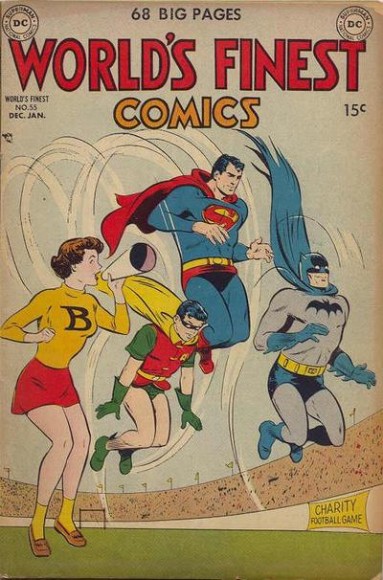
4. Costumed superheroes ultimately battle criminals in the name of the law—even if they themselves oft operate outside a strictly legal framework. Only in the mod country, the very condition of law is a problem. This is because of a basic logical paradox: no system can generate itself.
Whatsoever power capable of creating a system of police force cannot itself exist bound by them. So constabulary has to come up from somewhere else. In the Heart Ages, the solution was simple: the legal social club was created, either directly or indirectly, by God. God, as the Old Attestation makes abundantly clear, is non leap past laws or even whatsoever recognizable organization of morality, which only stands to reason: if you created morality, you tin can't, by definition, exist bound by it. The English language, American, and French revolutions changed all that when they created the notion of popular sovereignty—declaring that the ability once held by kings is at present held past an entity called "the people."
"The people," however, are bound by the laws. So in what sense tin can they have created them? They created the laws through those revolutions themselves, but, of class, revolutions are acts of law-breaking. It is completely illegal to ascent up in artillery, overthrow a government, and create a new political gild. Cromwell, Jefferson, and Danton were surely guilty of treason according to the laws under which they grew up, as surely as they would have been had they tried to do the aforementioned affair once again twenty years later.
And so, laws emerge from illegal activity. This creates a primal incoherence in the very thought of modern government, which assumes that the state has a monopoly of the legitimate use of violence (only the police, or prison house guards, have the legal correct to vanquish you up). It'south okay for law to use violence because they are enforcing the police force; the law is legitimate because it's rooted in the constitution; the constitution is legitimate considering it comes from the people; the people created the constitution by acts of illegal violence. The obvious question, and then, is: how does ane tell the divergence between "the people" and a mere rampaging mob?
There is no obvious answer.
The response, by mainstream, respectable opinion, is to try to push the problem every bit far away as possible. The usual line is: the age of revolutions is over, except perhaps in benighted spots like Gabon or Syria, and nosotros can at present modify the constitution, or legal standards, past legal means. This of grade means that the basic structures will never change. We can witness the results in the US, which continues to maintain an architecture of state, with its electoral college and 2 party-system, that—while quite progressive in 1789—now makes u.s. appear, in the optics rest of the earth, the political equivalent of the Amish, still driving around with horses and buggies. It likewise means we base the legitimacy of the whole system on the consent of the people despite the fact that the just people who were ever actually consulted on the matter lived over 200 years ago. In America, at least, "the people" are all long since dead.
We've gone, then, from a state of affairs where the ability to create a legal gild derives from God, to 1 where it derives from armed revolution, to one where it is rooted in sheer tradition—"these are the customs of our ancestors, who are we to doubt their wisdom?" Of class, a not insignificant number of American politicians make clear they'd really like to give information technology back to God once more. For the radical Left and the authoritarian Correct the trouble of constituent power is very much alive, simply each takes diametrically opposite approaches to the fundamental question of violence.
The Left, moderated by the disasters of the 20th century, has largely moved away from its older celebration of revolutionary violence, preferring non-violent forms of resistance. Those who act in the proper name of something college than the law can exercise so precisely because they don't act like a rampaging mob.
For the Right, on the other hand—and this has been true since the rise of fascism in the '20s—the very thought that in that location is something special about revolutionary violence, anything that makes information technology unlike from mere criminal violence, is so much self-righteous twaddle. Violence is violence. But that doesn't mean a rampaging mob tin't exist "the people," considering violence is the real source of police and political order anyway. Whatever successful deployment of violence is, in its ain manner, a form of elective ability.
This is why, equally Walter Benjamin noted, nosotros cannot help but admire the "great criminal": because, as and so many flick posters put it, "he makes his own law." After all, any criminal organization does, inevitably, brainstorm developing its own—often quite elaborate—set of internal laws. They take to, as a way of controlling what would otherwise be completely random violence. From the right-wing perspective, that'south all that law ever is. It is a ways of controlling the very violence that brings it into beingness, and through which it is ultimately enforced.
This makes it easier to understand the often surprising affinity betwixt criminals, criminal gangs, correct-wing political movements, and the armed representative state. Ultimately, they speak the same linguistic communication. They create their own rules on the basis of force. As a result, they typically share the aforementioned broad political sensibilities. Mussolini might take wiped out the mafia, but Italian Mafiosi notwithstanding idolize Mussolini. In Athens, nowadays, in that location'due south active collaboration between the criminal offence bosses in poor immigrant neighborhoods, fascist gangs, and the police. In fact, in this case information technology was conspicuously a political strategy: faced with the prospect of popular uprisings against a right-wing authorities, the constabulary beginning withdrew protection from neighborhoods near the immigrant gangs, so started giving tacit support to the fascists. For the far-right, then, it is in that space where different tearing forces operating outside of the legal society interact that new forms of power, and hence of guild, can emerge.
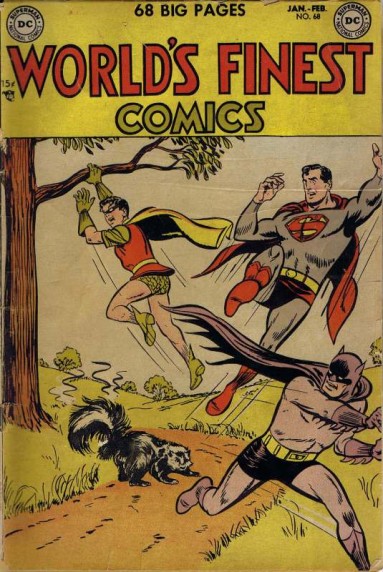
V. What does all this accept to practice with costumed superheroes? Well, everything. Because this is exactly the space that superheroes, and super-villains, also inhabit. An inherently fascist space, inhabited just past gangsters, would-be dictators, police, and thugs, with endlessly blurring lines between them.
Sometimes the cops are legalistic, sometimes they're corrupt. Sometimes the law themselves slip into vigilantism. Sometimes they pursue the superhero, sometimes they look the other way, sometimes they assistance. Villains and heroes occasionally team upward. The lines of strength are always shifting. If anything new were to sally, information technology could but be through such shifting forces. There'due south nothing else, since, in the DC and Marvel universes, neither God nor The People really be.
Insofar equally there is a potential for constituent power then, it can only come from purveyors of violence. The supervillains and evil masterminds, when they are not only indulging in random acts of terror, are always scheming of imposing a New Globe Order of some kind or some other. Surely, if Cerise Skull, Kang the Conqueror, or Medico Doom ever did succeed in taking over the planet, in that location would exist lots of new laws created very quickly, although their creator would doubtless non himself feel bound past them. Superheroes resist this logic. They practice not wish to conquer the world—if only considering they are not monomaniacal or insane. As a result, they remain parasitical off the villains in the same style that police force remain parasitical off criminals: without them, they'd have no reason to be. They remain defenders of a legal and political system which itself seems to have come out of nowhere, and which, nonetheless faulty or degraded, must be defended, considering the but alternative is then much worse.
They aren't fascists. They are just ordinary, decent, super-powerful people who inhabit a world in which fascism is the only political possibility.
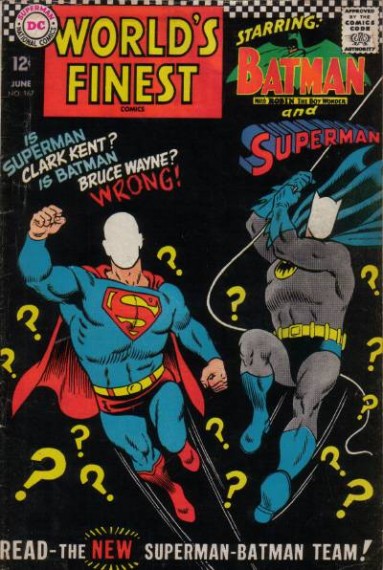
Six. Why, might we enquire, would a form of entertainment premised on such a peculiar notion of politics sally in early on to mid-20th century America, at just effectually the fourth dimension that actual fascism was on the ascent in Europe? Was information technology some kind of fantasy American equivalent? Not exactly. It'due south more that both fascism and superheroes were products of similar historical predicament: What is the foundation of social order when one has exorcised the very thought of revolution? And above all, what happens to the political imagination?
Ane might brainstorm hither by because that the core audience for superhero comics is adolescent or pre-boyish white boys. That is: boys who are at a indicate in their lives where they are likely to exist both maximally imaginative and at to the lowest degree a picayune chip rebellious, but who are being groomed to eventually accept on positions of authority and power in the world, to exist fathers, sheriffs, small business owners, middle direction. What do they learn from these endless repeated dramas? Well, first off, that imagination and rebellion lead to violence. Second, that, like imagination and rebellion, violence is a lot of fun; thirdly, that violence must ultimately exist directed back against whatever overflow imagination and rebellion lest everything go askew. These things must be contained! This is why, insofar as superheroes are allowed to be imaginative in any manner, their imagination can but be extended to the design of their clothes, their cars, maybe their homes, their various accessories.
It'due south in this sense that the logic of the superhero plot is profoundly, deeply conservative. Ultimately, the partition between Left- and Right-fly sensibilities turns on one's mental attitude towards the imagination. For the Left, imagination, creativity, by extension production, the ability to bring new things and new social arrangements into beingness, is e'er to be celebrated. It is the source of all existent value in the world. For the Right, information technology is dangerous, and ultimately evil. The urge to create is also a destructive urge. This kind of sensibility was rife in the popular Freudianism of the solar day: the Id was the motor of the psyche, but as well amoral; if actually unleashed, it would lead to an orgy of destruction. This is also what separates conservatives from fascists. Both concord that the imagination unleashed can only atomic number 82 to violence and destruction. Conservatives wish to defend us confronting that possibility. Fascists wish to unleash information technology anyway. They aspire to exist, as Hitler imagined himself, slap-up artists painting with the minds, claret, and sinews of humanity.
This ways that it's non just the mayhem that becomes the reader'south guilty pleasure, but the very fact of having a fantasy life at all. And while it might seem odd to think whatever artistic genre is ultimately a alarm near the dangers of the homo imagination, it would certain explain why, in the staid '40s and '50s, anybody did seem to feel there was something vaguely naughty about reading them. It too explains how in the '60s information technology could all all of a sudden seem so harmless, allowing the advent of silly, campy Boob tube superheroes like the Adam Westward Batman serial, or Sabbatum morn Spiderman cartoons.
If the bulletin was that rebellious imagination was okay as long as information technology was kept out of politics, and simply confined to consumer choices (clothes, cars, and accessories), this had become a message that even executive producers could easily get behind.
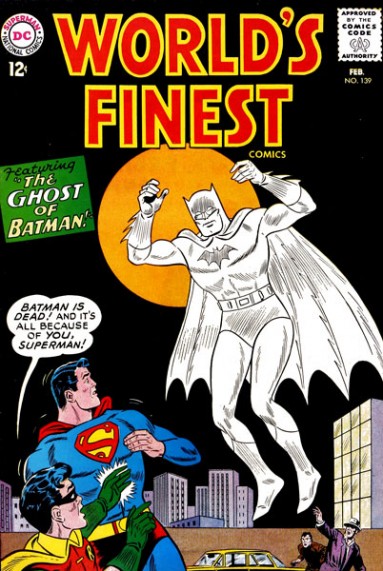
VII. If the archetype comic book is ostensibly political (about madmen trying to have over the world), really psychological and personal (about overcoming the dangers of rebellious boyhood), merely ultimately political after all, then the new superhero movies are precisely the opposite. They are ostensibly psychological and personal, really political, but ultimately psychological and personal.
The humanization of superheroes didn't showtime in the movies. Information technology really began in the '80s and '90s, within the comic book genre itself, with Frank Miller'south Dark Knight Returns and Alan Moore'due south Watchmen—what might be called superhero noire. At that time, superhero movies were nonetheless working through the legacy of the '60s camp tradition. One might say the new spirit reached its cinematic peak in Batman Begins, the first of the Nolan trilogy. In that movie, Nolan substantially asks, "what if someone like Batman actually did be, in the real earth? What would it actually take to make someone desire to dress up as a bat and set on criminals?"
Unsurprisingly, psychedelic drugs play an important role. So do severe mental health bug, and a history of association with bizarre religious cults. It is curious that commentators on the movie never seem to pick upwards on the fact that Bruce Wayne, in the Nolan films, is borderline psychotic.
Equally himself he is almost completely dysfunctional, incapable of forming friendships or romantic attachments, uninterested in piece of work unless it somehow reinforces his morbid obsessions. The hero was so plain crazy, and the moving-picture show and so obviously nigh his battle with his own craziness, that it's not a problem that the villains are simply a series of ego-appendages, peculiarly in the first film of the trilogy: Ra's al Ghul (the bad father), the Crime boss (the successful businessman), the Scarecrow (who drives the businessman insane.) There'due south cipher especially appealing almost any of them, merely that doesn't matter: they're all simply shards and tessera of the hero's shattered mind. As a upshot, at that place's obviously a political message. Or so it seems. When you create a movie out of characters so encrusted with myth and canon history, no manager is entirely in control of his material.
In the movie, Ra's al Ghul start initiates Batman into the League of Shadows in a monastery in Bhutan, and only then reveals his plan to destroy Gotham to rid the world of its abuse. In the original comics, nosotros learn that Ra's al-Ghul—a grapheme introduced, tellingly, in 1971—is in fact a Zerzanesque Primitivist and eco-terrorist, adamant to restore the remainder of nature by reducing the earth'due south human population by roughly 99 percent. None of the villains in any of the three movies want to rule the earth. They don't wish to have ability over others, or to create new rules of any sort. Even their henchmen are temporary expedients—they always ultimately plan to kill them.
Nolan's villains, in curt, are always anarchists, but they're e'er very peculiar anarchists, of a sort that seem to be just in the filmmaker'south imagination. They are anarchists who believe that man nature is fundamentally evil and corrupt. The Joker, the real hero of the second moving picture, makes all of this explicit: he is the Id become philosopher.
The Joker is nameless, has no origin other than whatever he whimsically invents on any particular occasion, and information technology'due south not even clear what his powers are. Yet he is, inexorably, powerful. The Joker is a pure forcefulness of self-cosmos, a poem written by himself. His only purpose in life appears to be an obsessive need to evidence to others first, that everything is and can only be poetry—and second, that poetry is evil.
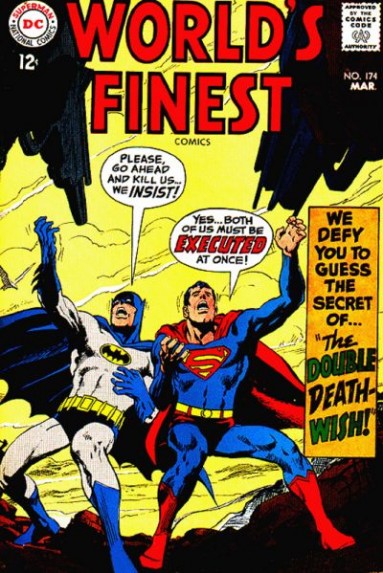
8. So here we are back to the key theme of the early superhero universes: a prolonged reflection on the dangers of the human imagination, how the reader's own desire to immerse oneself in a earth driven past artistic imperatives is living proof of why that the imagination must always exist carefully contained.
The consequence is a thrilling movie, with a villain both likeable—he's simply so obviously having fun with it—and genuinely frightening. Batman Begins was simply full of people talking most fear. The Night Knight actually produced some. But even that movie begins to fall flat the moment it touches on pop politics. The end, when Bruce and Commissioner Gordon settle on the programme to scapegoat Batman and create a false myth around the martyrdom of Harvey Dent, is nothing short of a confession that politics is identical to the fine art of fiction. The Joker was right: redemption lies just in the fact that the violence, the deception, tin can exist turned back upon itself. Nolan would have done well to go out it at that.
The problem is that this vision of politics simply isn't truthful. Politics is not only the art of manipulating images, backed upwards by violence. It's not just a duel between impresarios before an audience that will believe most anything if presented artfully enough. No doubt it must seem that way to extraordinarily wealthy Hollywood motion-picture show directors, but between the shooting of the first and second movies, history intervened quite decisively to point that out just how incorrect this vision is.
The economic system collapsed. Not because of the manipulations of some secret social club of warrior monks, just because of a bunch of financial managers who, living in Nolan's bubble world and sharing his assumptions about the endlessness of popular manipulability, turned out to be incorrect. There was a mass popular response. Information technology did not have the form of a frenetic search for messianic saviors, mixed with outbreaks of nihilist violence: increasingly, it took the form of a series of real pop movements, fifty-fifty revolutionary movements, toppling regimes in the Middle East and occupying squares everywhere from Cleveland to Karachi, trying to create new forms of republic.
Constituent power had reappeared, and in an imaginative, radical, and remarkably non-violent form. This is precisely the kind of situation a superhero universe cannot address. In Nolan's world, something like Occupy could only have been the product of some tiny grouping of ingenious manipulators who really are pursuing some underground agenda.
The Batman series really should have left such topics alone, but apparently Nolan couldn't help himself. The result is nearly completely breathless. The plot is convoluted and barely worth recounting. A rival businessman hires Catwoman to steal his Bruce Wayne's fingerprints and then he can utilise them to steal all his money, merely really he is being manipulated by a gasmask-wearing supervillain mercenary named Blight. Blight is stronger than Batman, but he's pining with unrequited beloved for Ra's al-Ghul's daughter Talia, crippled past mistreatment in his youth in a dungeon-like prison house, his face up invisible behind a mask he must wear continually so as not to collapse in agonizing hurting. Insofar as the audience identifies with a villain like that, it tin can simply be out of sympathy. No ane in their correct heed would desire to be Bane.
Presumably, though, that's the point: a warning against the dangers of undue sympathy for the unfortunate. Considering Blight is as well a charismatic revolutionary, who after disposing of Batman, reveals the myth of Harvey Dent to exist a lie, frees the denizen's of Gotham'southward prisons, traps almost its unabridged police forcefulness underground, and releases its ever-impressionable populace to and sack and burn the mansions of the 1%, dragging them before revolutionary tribunals. The Scarecrow, amusingly, reappears as Robespierre. Eventually, notwithstanding, he'due south intending to kill them all with a nuclear bomb converted from some kind of greenish energy project. The reason for this remains unclear.
Why does Blight wish to lead the people in a social revolution, if he's just going to nuke them all in a few weeks anyway? It's anyone'south approximate. He claims that before you destroy someone, first you lot must requite them hope. And so is the message that utopian dreams can only lead to nihilistic violence? Presumably something like that, but it's singularly unconvincing, since the plan to kill anybody came first, and the revolution was a decorative reconsideration. In fact, what happens to the city can simply possibly make sense as a fabric echo of what's always been most important: what'south happening in Bruce Wayne's tortured brain.
In the end, Batman and the Gotham police rising from their respective dungeons and join forces to battle the evil Occupiers outside the Stock Substitution, Batman fakes his own death disposing of the bomb, and Bruce ends up with Catwoman in Florence. A new phony martyr fable is born and the people of Gotham are pacified. In case of further trouble, we are assured there is also a potential heir to Batman, a disillusioned police officer named Robin. The movie finally ends, and everyone breathes a sigh of relief.
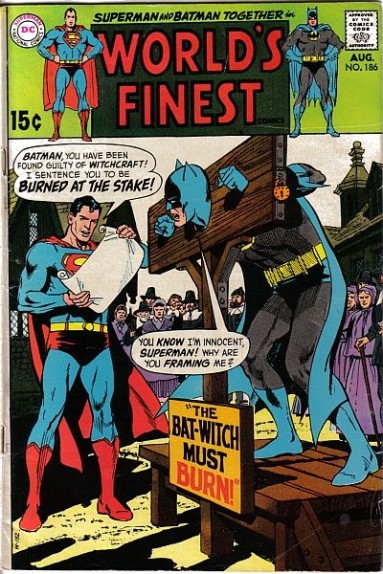
IX. If there's supposed to exist a have-home message from all of this, it must run something like: "Yes, the arrangement is corrupt, but information technology's all we have, and anyway, figures of authority tin be trusted if they accept start been moderated and endured terrible suffering." Normal constabulary allow children dice on bridges, but law who've been buried live for weeks tin can employ violence legitimately. Charity is much better than addressing structural problems. Any attempt to address structural issues, even through non-vehement ceremonious disobedience, actually is a form of violence, because that's all information technology could possibly be. Imaginative politics are inherently tearing, and therefore there'due south nothing inappropriate if police reply by bully protestors' heads repeatedly against the concrete.
Every bit a response to Occupy, this is cypher brusk of pathetic. WhenNight Knight came out in 2008, at that place was much give-and-take over whether the whole affair was actually a vast metaphor for the war on terror: how far is information technology okay for the adept guys (America, obviously) to adapt the bad guy'due south methods? The filmmakers managed to reply to these issues and even so produce a good movie. This is because the War on Terror actually was a battle of hush-hush networks and manipulative spectacles. Information technology began with a flop and ended with an bump-off. One can about call back of it as an attempt, on both sides, to actually enact a comic book version of the universe.
Once real constituent ability appeared on the scene, that universe shriveled into incoherence. Revolutions were sweeping the Eye East and the US was still spending hundreds of billions of dollars fighting a ragtag agglomeration of seminary students in Transitional islamic state of afghanistan. Unfortunately for Nolan, for all his manipulative powers the same thing happened to his world when even the hint of real popular power arrived in New York.
Source: https://thenewinquiry.com/super-position/
0 Response to "David Graeber the Mob Began to Think and Reason Review"
Post a Comment